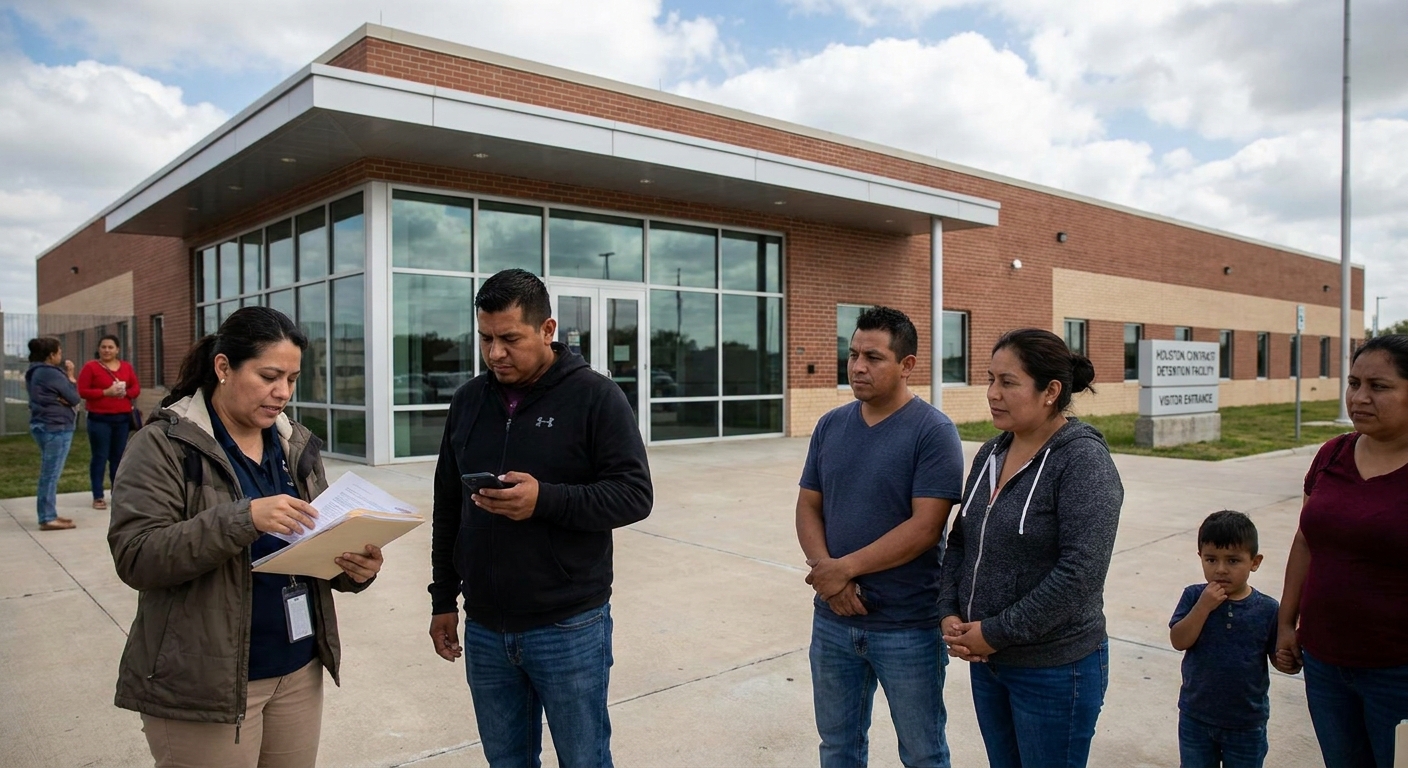
Why Immigration Detention at Contract Facilities Requires Immediate Action
When a family member is detained at a contract detention facility in Houston, the clock starts immediately. Contract facilities operate under different rules than government-run detention centers, and understanding how to secure release through an immigration bond is essential. The process moves quickly, and delays in filing paperwork or understanding your options can mean weeks or months of unnecessary detention.
Houston's contract detention facilities hold thousands of immigrants each year. These facilities are operated by private companies under contract with Immigration and Customs Enforcement (ICE). The conditions, procedures, and bond processes differ from standard ICE detention centers, which means your approach to securing release must be precise and informed.
FianzaYa specializes in helping Spanish-speaking families understand and access immigration bonds at contract detention facilities throughout Houston and Texas. This article explains what you need to know about fianza at Houston contract detention facilities, how the process works, and what steps to take immediately if your family member is detained.
Understanding Contract Detention Facilities in Houston
Contract detention facilities are private prisons that ICE uses to hold immigrants during removal proceedings. Houston has several of these facilities, each with its own administrative procedures and bond processing systems. Understanding which facility holds your family member is the first critical step.
These facilities differ from ICE field offices or government detention centers in several important ways. Contract facilities often have longer processing times for bond requests. They may have different visiting hours, phone access policies, and communication procedures. The staff may be less familiar with immigration law nuances, which can lead to delays or errors in bond paperwork.
Common contract detention facilities in the Houston area include facilities operated by major private prison companies. Each facility maintains its own records system and bond processing department. When you contact a facility to inquire about your family member's detention status, you will need to provide their full name, date of birth, and A-number (the immigration case number assigned by ICE).
The physical location of the facility matters because it determines which immigration court has jurisdiction over the case. Houston-area contract facilities fall under the jurisdiction of the Houston Immigration Court, though some cases may be transferred to other courts depending on the individual's circumstances.
What Is a Fianza and How Does It Work
A fianza, or immigration bond, is a financial guarantee that ensures the detained person will appear for all immigration court hearings and comply with ICE requirements. When a bond is set, the detained person can be released from custody if the bond amount is paid or if a bond company posts the bond on their behalf.
There are three main types of immigration bonds that may apply in Houston contract detention facility cases:
- Delivery Bond: This bond is set by ICE and guarantees that the person will be delivered to immigration court on their scheduled date. The bond amount is determined by an ICE officer based on factors like flight risk, criminal history, family ties, and employment history.
- Voluntary Departure Bond: This bond allows a person to leave the United States voluntarily instead of facing removal proceedings. The bond ensures they will actually depart within the specified timeframe.
- Order to Show Cause Bond: This bond is set by an immigration judge during a hearing and may be higher or lower than the initial ICE bond determination.
The bond process at contract detention facilities typically begins when ICE conducts an initial interview with the detained person. During this interview, ICE gathers information about family ties, employment, criminal history, and other factors that affect bond eligibility and amount. The detained person has the right to request a bond hearing if they believe the bond amount is too high or if they were not given a bond at all.
Once a bond is set, you have options for payment. You can pay the full bond amount directly to the facility, or you can work with a bond company that will post the bond for a fee, typically 10 to 15 percent of the total bond amount. Many families choose to work with a bond company because it allows them to pay a smaller amount upfront rather than the entire bond.
The Bond Hearing Process at Houston Contract Facilities
If ICE does not set a bond, or if the bond amount is unreasonably high, your family member has the right to request a bond hearing before an immigration judge. This hearing is critical because it is your opportunity to present evidence that your family member should be released on bond.
Bond hearings at Houston contract detention facilities follow specific procedures. The hearing is typically conducted by video conference, with the detained person appearing from the facility and the judge appearing from the immigration court. You and your family members may appear in person or by video to testify about the detained person's ties to the community, employment history, family relationships, and reasons why they are not a flight risk.
The burden of proof in a bond hearing is on the detained person. You must demonstrate that they are not a flight risk and that they do not pose a danger to the community. Evidence that helps in a bond hearing includes:
- Letters from employers confirming employment and length of service
- Lease agreements or mortgage documents showing community ties
- Birth certificates or custody documents for U.S. citizen children
- Bank statements showing financial stability
- Letters from community members, religious leaders, or organizations
- Medical records if the person has ongoing medical treatment in the area
- School enrollment documents for children
- Proof of prior compliance with immigration proceedings
The immigration judge will consider all evidence presented and make a decision on bond. If the judge sets a bond, the amount may be lower than the ICE determination, or the judge may order release on your own recognizance, meaning no bond payment is required.
Specific Challenges at Houston Contract Detention Facilities
Contract detention facilities in Houston present unique challenges that differ from government-run facilities. Understanding these challenges helps you prepare for the bond process more effectively.
Communication is often slower at contract facilities. Phone lines may be limited, and messages to detainees may take longer to deliver. Visiting hours may be more restricted than at government facilities. Some contract facilities limit visits to specific days and times, which can make it difficult for family members to maintain contact or gather information quickly.
Documentation and record-keeping at contract facilities can be inconsistent. Staff turnover is often high, which means information about your family member's case may not be readily available. When you call to inquire about bond status or hearing dates, you may receive different information from different staff members. This is why it is important to request written confirmation of all important information, including bond amounts, hearing dates, and facility contact information.
Bond processing timelines at contract facilities are often longer than at government facilities. After a bond is set or a hearing is scheduled, it may take several days or even weeks for the facility to process the paperwork and schedule the hearing. During this time, your family member remains in custody.
Some contract facilities have experienced staffing shortages or operational issues that delay bond processing further. If you notice unusual delays in your case, it is important to follow up in writing and request confirmation of the status of your family member's bond and hearing.
Steps to Take Immediately After Detention
The first hours and days after your family member is detained are critical. Taking the right steps immediately can significantly speed up the bond process and increase the chances of release.
Step 1: Confirm the Detention and Gather Information
Call the contract detention facility where your family member is being held and confirm their detention. You will need their full name, date of birth, and any identification numbers you have. Ask for the facility's bond department phone number and the name of the officer handling the case. Request written confirmation of the detention, the facility location, and the bond status.
Step 2: Document Everything
Write down the date and time of your call, the name of the person you spoke with, and all information provided. Keep all documents related to your family member's case in one organized folder. This includes any notices from ICE, bond documents, hearing notices, and correspondence with the facility.
Step 3: Prepare for the Bond Hearing
Even if a bond has already been set by ICE, you should prepare for a possible bond hearing. Gather all documents that show your family member's ties to Houston and the community. Collect letters from employers, family members, and community organizations. Organize financial documents that show stability and ability to comply with bond conditions.
Step 4: Understand Your Bond Options
Determine whether you will pay the bond directly or work with a bond company. If the bond amount is high, a bond company may be the more practical option. Research bond companies that work with the specific contract facility where your family member is detained.
Step 5: Request a Bond Hearing if Necessary
If no bond was set, or if the bond amount is unreasonably high, request a bond hearing in writing. Submit the request to the facility's bond department and keep a copy for your records. The facility must schedule a hearing within a reasonable timeframe, typically within 7 to 10 days.
Working with a Bond Company at Houston Contract Facilities
Bond companies play an important role in the immigration bond process at Houston contract detention facilities. A bond company posts the bond on behalf of your family, which allows them to be released from custody while their immigration case proceeds.
When you work with a bond company, you pay a fee, typically 10 to 15 percent of the total bond amount. This fee is non-refundable, even if the case is dismissed or the person is ultimately deported. The bond company assumes the financial risk that the person will appear for all hearings and comply with bond conditions.
Choose a bond company that has experience working with the specific contract detention facility where your family member is held. Different facilities have different procedures for accepting bond payments and releasing detainees. A bond company familiar with the facility can navigate these procedures more efficiently.
Ask the bond company about their timeline for posting bond. Some companies can post bond within 24 hours, while others may take several days. Ask about their process for communicating with the facility and confirming release. Ask whether they offer payment plans or accept multiple forms of payment.
Be cautious of bond companies that guarantee release or promise specific outcomes. No company can guarantee that ICE will accept a bond or that a judge will set a particular bond amount. Legitimate bond companies explain the process honestly and set realistic expectations.
Immigration Court Procedures for Houston Cases
Cases involving detainees at Houston contract facilities are heard in the Houston Immigration Court. Understanding how this court operates helps you prepare for your family member's case.
The Houston Immigration Court handles thousands of cases each year. Cases move through the court system in stages. The first hearing is typically a master calendar hearing, where the judge confirms that the person is represented by an attorney or is proceeding pro se (without an attorney), and the judge sets a date for the next hearing.
If your family member does not have an attorney, they have the right to request a continuance to find one. Many immigration attorneys offer free or low-cost consultations. Having an attorney significantly improves the chances of a favorable outcome in bond hearings and removal proceedings.
Bond hearings are separate from removal hearings. A bond hearing focuses only on whether the person should be released from custody pending their removal case. A removal hearing addresses whether the person has a legal right to remain in the United States.
The Houston Immigration Court is located in downtown Houston. Hearings may be conducted in person or by video conference, depending on the judge and the circumstances of the case. If your family member is detained at a contract facility outside Houston, their hearing may be conducted by video conference to avoid transportation costs and delays.
Common Reasons Bonds Are Denied or Set High
Understanding why bonds are denied or set at high amounts helps you prepare a stronger case for bond reduction or release.
ICE and immigration judges consider several factors when setting bond amounts. A person with a criminal history, particularly convictions for crimes of violence or drug trafficking, faces a higher risk of bond denial. A person with prior immigration violations or a history of not appearing for hearings is considered a flight risk and may be denied bond or given a very high bond amount.
Lack of community ties is another common reason for high bonds or denial. If a person has no family in the United States, no employment, and no long-term residence in one location, they are considered more likely to flee. Conversely, strong community ties, including family, employment, homeownership, and involvement in community organizations, support a lower bond or release on recognizance.
The nature of the immigration violation also affects bond decisions. A person who entered the country illegally may face a higher bond than a person who overstayed a visa. A person with a final removal order may be denied bond entirely, depending on the circumstances.
Financial ability to pay bond is not a factor in bond decisions. A person cannot be denied bond simply because they cannot afford to pay it. However, if a person has significant financial resources and is considered a flight risk, the judge may set a higher bond to ensure compliance.
Your Rights During the Bond Process
Your family member has specific rights during detention and the bond process. Understanding these rights helps you ensure that the process is handled fairly and legally.
Your family member has the right to be informed of the charges against them and the reason for their detention. They have the right to request a bond hearing if ICE does not set a bond or if they believe the bond is unreasonably high. They have the right to be represented by an attorney at all hearings.
Your family member has the right to make phone calls to contact family and an attorney. Contract facilities must allow reasonable phone access, though the specific hours and duration may be limited. Your family member has the right to receive mail and, in most cases, to receive visits from family members during designated visiting hours.
Your family member has the right to medical care while in detention. If they have a medical condition that requires ongoing treatment, they should inform the facility medical staff immediately and request that their treatment continue.
Your family member has the right to file a complaint if they are mistreated or if their rights are violated. Complaints can be filed with the facility's administration or with ICE's Office of Professional Responsibility.
Preparing Documentation for Bond Hearings
Strong documentation is essential for a successful bond hearing. The more evidence you present that your family member has ties to the community and is not a flight risk, the more likely the judge will set a reasonable bond or release them on recognizance.
Employment documentation is one of the strongest forms of evidence. Obtain a letter from your family member's employer that confirms their employment, length of service, job title, and salary. If your family member is self-employed, provide business licenses, tax returns, and bank statements showing business income.
Family documentation shows ties to the community. Provide birth certificates for any U.S. citizen or permanent resident children. Provide marriage certificates if your family member is married to a U.S. citizen or permanent resident. Provide documentation of custody or guardianship if your family member cares for minor children.
Housing documentation shows stability and long-term residence. Provide a lease agreement or mortgage documents showing your family member's address and length of residence. Provide utility bills or other documents showing current residence.
Community involvement documentation shows that your family member is integrated into the community. Provide letters from religious organizations, schools, community centers, or other organizations where your family member is involved. These letters should describe the person's involvement and their character.
Financial documentation shows stability and ability to comply with bond conditions. Provide bank statements showing savings and regular income. Provide proof of payment of taxes or other financial obligations.
What Happens After Bond Is Posted
Once bond is posted and your family member is released from the contract detention facility, the case continues in immigration court. Understanding what happens next helps you prepare for the next stages of the process.
Your family member will be released with conditions. These conditions typically include regular check-ins with ICE, restrictions on travel, and a requirement to appear at all immigration court hearings. Violating bond conditions can result in re-detention and forfeiture of the bond.
Your family member should report to ICE on the schedule provided. Failure to report is a serious violation that can result in immediate re-detention. If your family member cannot report on the scheduled date due to an emergency, they should contact ICE immediately to reschedule.
Your family member should not travel outside the United States while on bond. Travel outside the country may result in re-detention upon return or may be considered abandonment of the case. If travel is necessary, your family member should request permission from ICE or the immigration court before traveling.
Your family member should maintain contact with their attorney and prepare for the next court hearing. The next hearing may be a master calendar hearing to set a date for a removal hearing, or it may be a removal hearing itself, depending on the status of the case.
Next Steps: Getting Help with Your Case
If your family member is detained at a contract detention facility in Houston, time is critical. The sooner you take action, the sooner they can be released and reunited with your family.
FianzaYa provides a free initial evaluation to help you understand your options and develop a plan for securing your family member's release. During the evaluation, we review your family member's case, explain the bond process, and discuss the best strategy for your situation. We work with families throughout Texas and can help you navigate the specific procedures at Houston contract detention facilities.
Contact FianzaYa today for your free initial evaluation. We speak Spanish and English, and we understand the challenges facing Spanish-speaking families. We are here to help you bring your family member home.
For more information about immigration bonds and how we can help, visit our immigration bond services page.