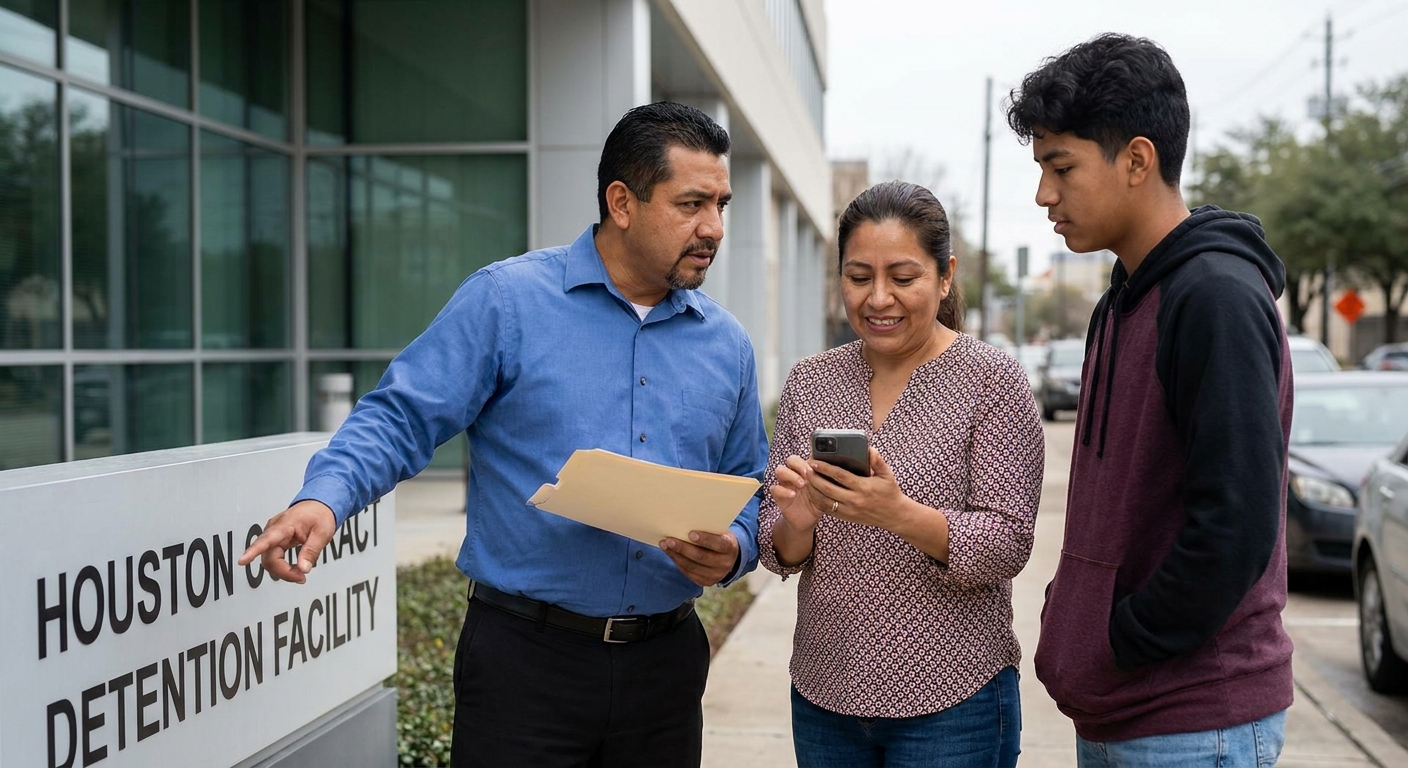
Why Immigration Detention at Contract Facilities Requires Immediate Action
When a family member is detained at a contract detention facility in Houston, time becomes your most valuable resource. Contract facilities operate under different rules than government-run detention centers, and the process for securing release through an immigration bond moves quickly. Understanding how fianzas work at these facilities, what you can expect, and how to act decisively will determine whether your loved one returns home or remains in custody while their case proceeds.
Houston's contract detention facilities hold thousands of individuals in immigration proceedings. These facilities are operated by private companies under agreements with Immigration and Customs Enforcement (ICE). The detention conditions, release procedures, and bond amounts differ from standard ICE facilities, which means your approach to securing a fianza must be tailored to the specific facility where your family member is held.
Understanding Contract Detention Facilities in Houston
Contract detention facilities in the Houston area are private institutions that house individuals detained by ICE. These facilities generate revenue by holding detainees, which creates a different operational environment than government-run centers. The facilities maintain their own intake procedures, visitation policies, and communication systems that can be confusing for families unfamiliar with the immigration system.
The largest contract detention facilities serving the Houston region include facilities that hold both criminal and civil immigration detainees. Some facilities specialize in holding individuals with specific case types or backgrounds. When your family member arrives at a contract facility, they are processed into a system that operates independently from ICE's main detention network, though ICE maintains custody and control over the individual.
Contract facilities often have stricter communication policies than government facilities. Phone calls may be limited to specific hours, collect calls may be expensive, and video visitation may be restricted. These limitations can make it harder for families to gather information quickly, which is why understanding the facility's procedures before you need them is valuable.
How Immigration Bonds Work at Contract Facilities
An immigration bond, or fianza, is a financial guarantee that an individual will appear for their immigration proceedings. When ICE detains someone, they make a determination about whether that person should be released on bond, held without bond, or released on their own recognizance. This determination happens at a bond hearing, which must occur within a specific timeframe after detention.
The bond amount set by an immigration judge reflects several factors: the individual's ties to the community, employment history, family relationships in the United States, criminal history if any, and the strength of their immigration case. Contract facilities process bond hearings the same way government facilities do, but the timeline and procedures may vary slightly depending on the facility's internal operations.
Once a bond amount is set, you have options for payment. You can pay the full bond amount directly to ICE, or you can work with a fianza company that posts the bond on your behalf. Many families choose to work with a fianza company because the full bond amount can be substantial, sometimes ranging from several hundred to several thousand dollars. A fianza company typically charges a percentage of the bond amount as a fee, which is non-refundable, but allows your family member to be released without paying the entire bond upfront.
The bond hearing itself is critical. During this hearing, an immigration judge reviews the government's case for detention and hears arguments from the detainee about why they should be released. If you have not yet secured representation, the bond hearing is an urgent moment to have someone experienced in immigration law present to argue for release or a reasonable bond amount.
The Bond Hearing Process at Houston Contract Facilities
Bond hearings at contract facilities typically occur within 3 to 5 days of detention, though this timeline can vary. The hearing may take place in person at the facility, by video conference, or in some cases, by telephone. The immigration judge assigned to your case will not necessarily be located in Houston, which means the hearing may be conducted remotely even if your family member is detained locally.
During the bond hearing, the government presents its position on whether the individual should be detained. The government may argue that the person is a flight risk, poses a danger to the community, or has a criminal history that warrants detention. Your family member, or their representative, then has the opportunity to present evidence and arguments for release.
Evidence that strengthens a bond case includes employment letters, proof of community ties, letters of support from family members, documentation of medical conditions requiring treatment, and evidence of stable housing. If your family member has a criminal history, documentation showing rehabilitation, employment, or community service can help offset the government's concerns. Having this documentation prepared before the hearing gives you the best chance of success.
If the judge sets a bond amount, you then have the option to pay it or arrange for a fianza company to post it. If the judge denies bond entirely, you have the right to request a bond redetermination hearing after a specified period, typically 6 months, if circumstances have changed.
Choosing a Fianza Company for Contract Facility Releases
Not all fianza companies operate the same way, and not all have experience with contract facilities in Houston. When selecting a fianza company, verify that they have established relationships with the specific facility where your family member is detained. Some companies work primarily with government facilities and may not have efficient processes for contract facilities.
A reliable fianza company will explain their fee structure clearly, provide a timeline for release once the bond is posted, and maintain communication with you throughout the process. They should be able to tell you how long release typically takes at your family member's specific facility, whether that is a few hours or a full business day. Some contract facilities process releases quickly, while others have slower procedures.
The fee charged by a fianza company is typically a percentage of the bond amount, usually between 10 and 15 percent, though this varies by company and by state. This fee is non-refundable, meaning you do not get it back even if your family member is later released or their case is dismissed. However, if the bond is forfeited because your family member fails to appear for proceedings, the fianza company may pursue you for the full bond amount, so understanding your obligations is essential.
Before committing to a fianza company, ask about their experience with your family member's specific facility, their communication practices, and their timeline for posting bonds. A company that responds quickly to your questions and provides clear information is more likely to handle your case efficiently.
Common Challenges with Contract Facility Bonds in Houston
Contract facilities sometimes create delays in the bond posting process that families do not anticipate. Some facilities require bonds to be posted during specific business hours, which can extend the time between when a fianza company receives payment and when your family member is actually released. Other facilities have strict procedures for verifying bond payments that can add hours to the process.
Communication between the facility and fianza companies can also be inconsistent. Some contract facilities have dedicated staff for bond processing, while others handle bonds as part of general administrative duties. This inconsistency means that the timeline for release can vary significantly depending on which facility is involved and which staff members are working on a given day.
Another challenge is that contract facilities sometimes hold individuals for additional time after a bond is posted, claiming they need to complete administrative procedures or security checks. While some delay is normal, excessive delays should be questioned. If your family member is not released within a reasonable timeframe after the bond is posted, contact the facility directly and request clarification on the status.
Additionally, some contract facilities charge fees for services that government facilities do not charge, such as fees for phone calls, video visitation, or commissary access. These fees can add up quickly and create financial strain on families already dealing with bond costs. Understanding the facility's fee structure before your family member arrives can help you prepare financially.
Legal Representation and Bond Hearings
Having experienced legal representation at a bond hearing significantly increases the likelihood of a favorable outcome. An immigration attorney or accredited representative can present your family member's case effectively, challenge the government's arguments, and ensure that all relevant evidence is presented to the judge.
If your family member cannot afford an attorney, they have the right to request a continuance of the bond hearing to allow time to find representation. Some organizations in Houston provide free or low-cost immigration legal services, though availability is limited. Requesting a continuance gives you time to secure representation and gather evidence for a stronger case.
Even if you ultimately decide to work with a fianza company to post the bond, having legal representation during the bond hearing is a separate and important step. The bond hearing determines the amount you will need to pay, so investing in representation at this stage can result in a lower bond amount, which reduces the fianza fee you will owe.
After the Bond is Posted: What Happens Next
Once your family member is released from the contract facility, their immigration case continues. Release on bond does not mean the case is resolved, it simply means they are no longer in custody while the case proceeds. Your family member will have conditions of release, which typically include reporting to ICE on a regular schedule, maintaining a valid address, and not leaving the country.
It is critical that your family member complies with all conditions of release. Failure to comply can result in re-detention and forfeiture of the bond. If your family member cannot meet a condition of release, such as a reporting requirement, contact their attorney or representative immediately to request a modification.
Your family member should also continue working with an immigration attorney on their underlying case. The bond hearing is not the final determination of their immigration status. Depending on the type of case, your family member may be eligible for relief from removal, such as asylum, cancellation of removal, or other forms of protection. An experienced immigration attorney can evaluate the case and advise on the best strategy moving forward.
Understanding Bond Forfeiture and Your Obligations
When you post a bond through a fianza company, you are entering into a financial obligation. If your family member fails to appear for any immigration proceeding or violates the conditions of release, ICE can forfeit the bond. This means the full bond amount becomes due, and the fianza company will pursue you for payment.
Bond forfeiture is serious and can result in legal action against you. Before posting a bond, make sure your family member understands the importance of appearing for all proceedings and complying with release conditions. If circumstances change and your family member cannot comply with a condition, seek legal advice immediately rather than ignoring the problem.
Some fianza companies offer bond forfeiture insurance, which protects you if the bond is forfeited. This insurance is optional and comes at an additional cost, but it can provide peace of mind if you are concerned about your family member's ability to comply with release conditions.
Costs Associated with Contract Facility Detention and Bonds
Beyond the fianza fee, there are other costs associated with detention at a contract facility. Phone calls from the facility are typically collect calls and can be expensive, sometimes costing several dollars per minute. Video visitation may also have fees. Commissary access, where your family member can purchase hygiene items and food, requires you to deposit money into their account, and the facility may charge fees for this service.
If your family member needs medical care while detained, the facility may charge copays or fees for services. These costs can accumulate quickly, adding financial strain to families already dealing with bond costs and legal fees.
When budgeting for your family member's detention and release, account for these additional costs. Some families set up a separate fund to cover phone calls and commissary access, which helps ensure your family member has access to basic necessities while detained.
Next Steps: Securing Your Family Member's Release
If your family member is detained at a contract facility in Houston, your first step is to confirm their location and gather information about their case. Contact the facility directly to learn when the bond hearing is scheduled and what information you need to provide.
Second, begin gathering documentation that supports your family member's case for release. Collect employment letters, proof of community ties, letters of support, and any other evidence that demonstrates your family member's stability and connections to the community.
Third, seek legal representation. Contact a focused immigration law firm or a legal services organization to discuss your family member's case and options. If you cannot afford an attorney, ask about payment plans or free services in your area.
Finally, once a bond amount is set, contact a fianza company with experience at your family member's specific facility. Provide them with the bond amount and ask for a clear timeline and fee estimate.
FianzaYa provides a free initial evaluation to families facing immigration detention. During this evaluation, we review your family member's situation, explain your options, and discuss next steps. Contact us today to schedule your free evaluation and begin the process of bringing your family member home. Visit our free evaluation page to get started, or learn more about our immigration bond services.