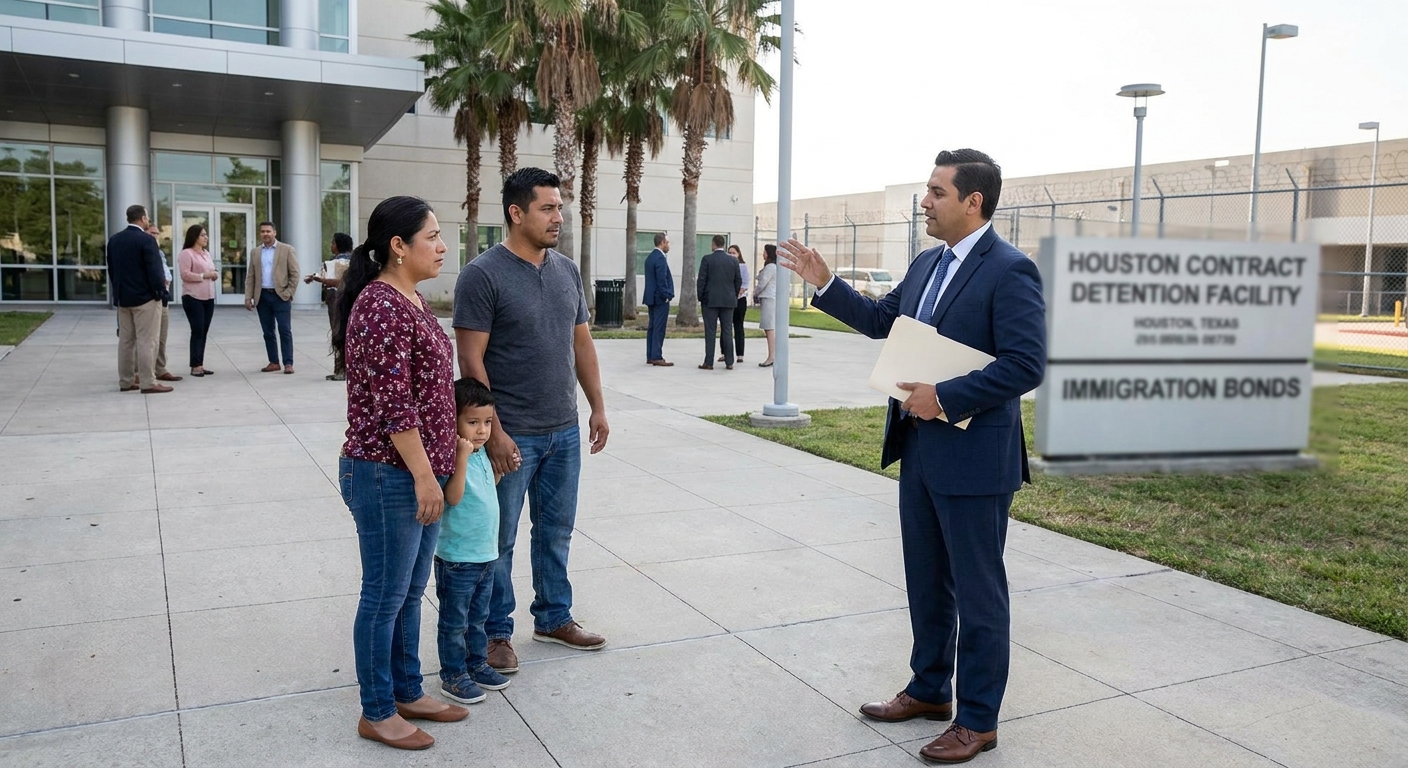
Why Immigration Detention at Contract Facilities Requires Immediate Action
When a family member is detained at a contract detention facility in Houston, time becomes your most valuable resource. Contract facilities operate under different rules than government-run detention centers, and understanding how to secure release through an immigration bond is essential. The process moves quickly, and delays in filing paperwork or understanding your options can mean weeks or months of unnecessary detention.
Houston's contract detention facilities hold thousands of individuals in immigration proceedings. These facilities are operated by private companies under contract with Immigration and Customs Enforcement (ICE). The conditions, procedures, and bond hearing processes differ from standard ICE detention centers, which means your approach to securing release must be tailored to the specific facility where your family member is held.
A fianza, or immigration bond, is a financial guarantee that ensures the detained person will appear for all immigration court hearings and comply with release conditions. Without understanding how bonds work at contract facilities, families often miss critical deadlines or fail to present the strongest possible case for release.
Understanding Contract Detention Facilities in Houston
Contract detention facilities in the Houston area are privately operated but hold individuals under ICE authority. These facilities have their own administrative procedures, visitation rules, and communication systems that differ from government detention centers. Knowing these differences is crucial to moving your case forward efficiently.
The largest contract detention facilities serving the Houston area include facilities that house hundreds of individuals in immigration proceedings. Each facility maintains its own intake procedures, phone systems, and rules about when detainees can receive calls or visits. Some facilities allow limited phone access, while others restrict communication to specific hours. Understanding these operational details helps families stay informed and respond quickly when bond hearings are scheduled.
Contract facilities also process bond requests differently than ICE field offices. The paperwork requirements, the timeline for scheduling bond hearings, and the personnel involved in making bond decisions can vary. Some contract facilities have on-site immigration judges or hearing officers, while others require detainees to appear via video conference for bond hearings. These procedural differences directly affect how quickly your family member can be released.
How Immigration Bonds Work at Contract Facilities
An immigration bond serves as a financial guarantee to ICE that the detained person will comply with release conditions and appear for all immigration proceedings. The bond amount is set by an immigration judge or ICE officer based on factors including the person's ties to the community, employment history, family relationships, and immigration history.
At contract detention facilities, bond hearings typically occur within 72 hours of detention, though this timeline can vary. The hearing may take place in person at the facility or via video conference. During the hearing, the immigration judge or hearing officer considers evidence about why the person should be released on bond rather than held without bond or released on their own recognizance.
The bond amount can range from a few hundred dollars to several thousand dollars, depending on the circumstances. Some individuals are released on their own recognizance, meaning no financial bond is required. Others may be held without bond if the government argues they pose a flight risk or danger to the community. Understanding what factors influence bond decisions allows families to prepare stronger cases for release.
Once a bond is set, the family has several options for payment. They can pay the full bond amount directly to ICE, or they can work with a bail bondsman who posts the bond on their behalf for a non-refundable fee, typically 10 to 15 percent of the total bond amount. The choice depends on the family's financial situation and the bond amount set by the judge.
The Bond Hearing Process at Houston Contract Facilities
The bond hearing is your opportunity to present evidence and arguments for why your family member should be released. Preparation for this hearing directly affects the outcome. Many families who appear unprepared receive higher bond amounts or unfavorable decisions that could have been prevented with proper documentation and presentation.
Before the hearing, gather documentation that supports release. This includes employment letters showing current or potential employment, lease agreements or property ownership documents proving ties to the community, letters from family members, school enrollment documents for children, medical records if relevant, and any evidence of community involvement. The stronger your documentation, the more persuasive your case becomes.
During the hearing, the government presents its case for why the person should remain detained or why a high bond is appropriate. The detainee and their representative then present evidence and arguments for release. The hearing officer or judge considers factors including the person's family ties, employment history, length of residence in the United States, criminal history if any, immigration history, and whether they have previously failed to appear for immigration proceedings.
The hearing itself may last anywhere from 15 minutes to over an hour, depending on the complexity of the case and the amount of evidence presented. Contract facilities often schedule multiple hearings in a single day, so the process moves quickly. Having someone present who understands the legal standards and can present evidence effectively significantly improves outcomes.
Common Challenges in Contract Facility Bond Cases
Families often encounter specific obstacles when seeking bonds at contract detention facilities. Understanding these challenges in advance allows you to address them proactively rather than discovering them during the hearing.
Communication barriers are among the most common challenges. Contract facilities may have limited phone access, making it difficult for families to gather information quickly. Some facilities require calls to be made during specific hours, and detainees may not have access to phones at all times. This delays the process of gathering information needed for the bond hearing.
Language barriers also complicate matters. While interpreters are provided during official proceedings, communication with facility staff about procedures and timelines may occur only in English. Families who do not speak English fluently may struggle to understand what documents are needed or when hearings are scheduled.
Another significant challenge is the short timeline. With bond hearings often scheduled within 72 hours of detention, families have limited time to gather documentation, arrange legal representation, and prepare their case. Delays in receiving notification of the hearing date can make this timeline even tighter.
Additionally, some families lack the financial resources to post bond even if it is set at a reasonable amount. Understanding your options for payment, including bail bondsmen and payment plans, is essential when facing this situation.
Preparing Your Case for a Bond Hearing
Successful bond cases require thorough preparation and strategic presentation of evidence. The difference between a high bond amount and a reasonable one often comes down to how well the case is prepared and presented.
Start by documenting your family member's ties to the community. Gather letters from employers confirming employment or offering employment. Collect letters from family members describing their relationship and the person's role in the family. Include school enrollment documents for any children, medical records showing ongoing treatment in the area, and utility bills or lease agreements proving residence. The more documentation you provide, the stronger your argument that the person has reasons to remain in the community and appear for hearings.
Next, prepare a clear narrative about your family member's background and circumstances. This narrative should explain how long they have lived in the United States, their family relationships, their employment history, and their community involvement. It should address any negative factors in their immigration history directly rather than hoping they will be overlooked. Transparency about past issues, combined with evidence of rehabilitation or changed circumstances, is more persuasive than avoiding the topic.
Organize all documents in a clear, logical order. Include a cover letter that summarizes the key points and references the supporting documents. Make copies for the hearing officer, the government attorney, and your own records. Present documents in a professional manner that shows you have taken the process seriously.
Consider whether your family member should testify during the hearing. Testimony can be powerful if the person is articulate and can explain their ties to the community and commitment to appearing for hearings. However, testimony can also backfire if the person is not prepared or if their immigration history includes concerning factors. This decision should be made carefully based on the specific circumstances of the case.
Working With a Bail Bondsman vs. Paying Bond Directly
Once a bond is set, families must decide whether to pay the full amount directly to ICE or work with a bail bondsman. Each option has advantages and disadvantages depending on your financial situation.
Paying the bond directly to ICE means the full amount is held as a guarantee. When the case concludes and the person is released from immigration proceedings, the bond is returned to whoever posted it. This option requires having the full bond amount available immediately, which many families cannot afford. However, if you have the resources, this option means you recover the full amount when the case ends.
Working with a bail bondsman means paying a non-refundable fee, typically 10 to 15 percent of the bond amount, and the bondsman posts the full bond with ICE. This option requires significantly less money upfront, making it accessible to more families. However, the fee is not refunded, even if the case is resolved favorably. For a $5,000 bond, a bail bondsman fee would be $500 to $750. For a $10,000 bond, the fee would be $1,000 to $1,500.
Some bail bondsmen also require collateral or a co-signer, particularly for larger bond amounts. Understanding these requirements before selecting a bondsman prevents surprises and delays in posting bond.
Immigration Court Proceedings After Bond Release
Securing bond release is not the end of the process. It is the beginning of immigration court proceedings that will determine your family member's immigration status and future in the United States. Understanding what comes next helps families prepare for the longer legal process ahead.
After release on bond, your family member must comply with all release conditions set by the immigration judge. These conditions typically include reporting to ICE on a specified schedule, maintaining a valid address, notifying ICE of any address changes, and appearing for all immigration court hearings. Failure to comply with any condition can result in re-detention and forfeiture of the bond.
Immigration court proceedings can take months or years to resolve, depending on the complexity of the case and the current court backlog. During this time, your family member may be eligible for various forms of relief from removal, including asylum, cancellation of removal, or other protections. The specific options depend on the person's immigration history and circumstances.
Having experienced legal representation throughout the immigration court process is essential. The bond hearing is only the first step. The decisions made during immigration court proceedings will determine whether your family member can remain in the United States or must be removed. Preparing for these proceedings while your family member is released on bond gives you the best opportunity to present a strong case.
Why Local Knowledge Matters for Houston Contract Facilities
Each contract detention facility in the Houston area operates with its own procedures, personnel, and timelines. Understanding the specific facility where your family member is detained gives you a significant advantage in securing release quickly.
Experienced representation familiar with Houston contract facilities knows which documents are most persuasive to the hearing officers at each facility. They understand the typical bond amounts set for different types of cases and can help you present evidence that addresses the specific concerns of the judges or hearing officers who will decide your case. They also know the communication procedures at each facility and can ensure you receive timely notification of hearings and other important deadlines.
Local knowledge also includes understanding the bail bondsmen who work with each facility, the typical timeline for scheduling hearings, and the specific evidence that has been most effective in securing favorable bond decisions. This information comes from handling cases at these facilities regularly and staying current with changes in procedures or personnel.
Additionally, experienced representation can identify potential issues before they become problems. If your family member's case includes factors that might concern the hearing officer, addressing these factors proactively in your presentation is far more effective than hoping they will be overlooked.
Next Steps: Securing Your Family Member's Release
If your family member is detained at a contract detention facility in Houston, time is critical. The sooner you take action, the sooner you can present your case for release and begin the process of bringing your family member home.
FianzaYa provides a free initial evaluation to assess your situation and explain your options. During this evaluation, we review the details of your family member's detention, explain how the bond process works at the specific facility where they are held, and discuss the steps needed to prepare for the bond hearing.
We also provide comprehensive immigration bond services that include gathering documentation, preparing your case, representing you at the bond hearing, and guiding you through the immigration court proceedings that follow. Our focus is on securing release as quickly as possible while building a strong foundation for the longer legal process ahead.
Contact FianzaYa today to schedule your free initial evaluation. The sooner you reach out, the sooner we can begin working to bring your family member home.